
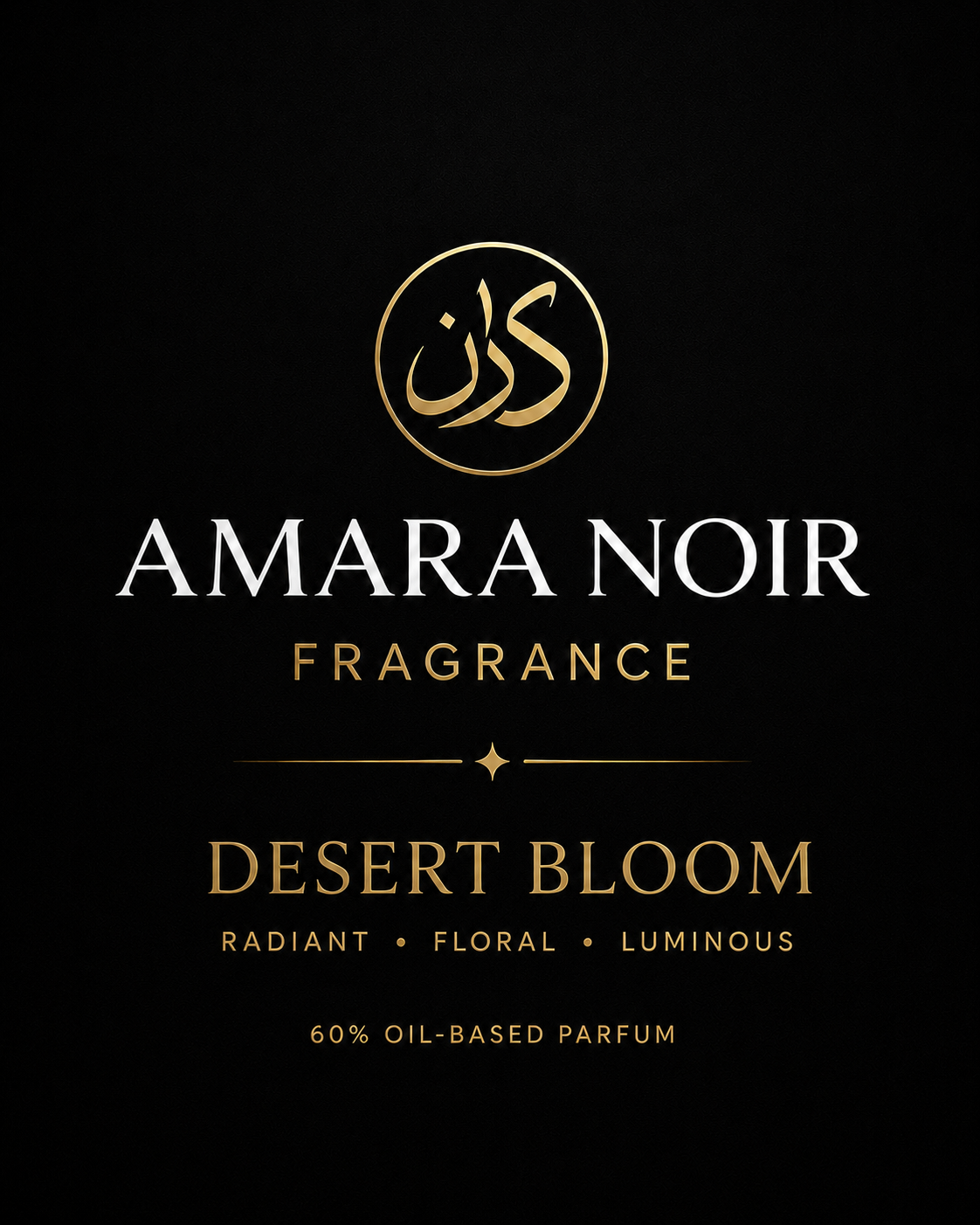
Choose the Desert Bloom sample when you want to explore a perfume with tuberose and ylang-ylang at its centre. Golden honey and citrus peel form the opening, while sandalwood and soft resins appear in the base. Your decision is whether that full floral setting is what you want, rather than whether one flower name sounds attractive.
A floral brief can mean several things to different people. You may want flowers to lead the whole impression, or enjoy a floral note as a quieter part of a fruity or woody perfume. Starting with the heart makes this particular sample useful for finding which preference is yours.
Choose the role you want flowers to have
Before trying Desert Bloom Sample, finish a simple sentence: I am looking for a floral perfume that also includes something else I enjoy. That second part might be honeyed warmth, a citrus cue or named woods in the base.
For Desert Bloom, you can make the question specific. Does the tuberose-and-ylang-ylang pairing interest you alongside golden honey and citrus peel? Do sandalwood and soft resins add to the appeal? If you are enthusiastic about the heart but unsure about the surrounding notes, the sample has a clear job.
You do not have to know how to identify each flower separately. A perfume is a composition, so enjoying the central pairing as one impression can be enough. Equally, familiarity with a flower’s name does not mean you know how this perfume will feel to you.
Read the supporting notes without moving the focus
Golden honey and citrus peel are the top notes. They give the opening a different written brief from a perfume introduced by spices or aquatic notes. Keep that distinction in mind if you usually choose a fresh opening but are interested in a more floral central character.
Tuberose and ylang-ylang occupy the heart together. Neither is a token floral added to an otherwise unrelated list: the named middle section is explicitly a two-flower pairing. That is the part to keep returning to if the purpose of the sample is to explore a floral centre.
Sandalwood and soft resins complete the base. These do not turn the flowers into a woody perfume by definition, but they matter to your overall interest. Someone who welcomes a wood-and-resin context has a different brief from someone seeking only the floral association.
Use three observations instead of a long scorecard
- Opening: does the honey-and-citrus direction appeal?
- Central impression: do I want to return to this floral character?
- Later impression: do I enjoy the perfume beyond my interest in its flower names?
Keep the answers personal and short. A note such as want a more fruit-led scent tells you more than an unexplained score. Another such as floral centre feels right for an evening choice can help you picture when you would use it. You are recording a preference, rather than producing a technical assessment.
The product directions say to use the fragrance on clean skin and allow it to develop without rubbing. The one-at-a-time comparison guide can help if several unfamiliar samples are competing for your attention.
Let the sample settle the floral question
If you enjoy the heart and its supporting notes, Desert Bloom may deserve a place on your shortlist. If the heart appeals but another part remains uncertain, revisit that specific question before deciding. There is no need to make every floral perfume fit the same expectation.
Our Desert Bloom guide expands the complete profile. When you want flowers at the centre with honey, citrus, sandalwood and soft resins around them, consider Desert Bloom for your next bottle choice.

Leave a comment
This site is protected by hCaptcha and the hCaptcha Privacy Policy and Terms of Service apply.