
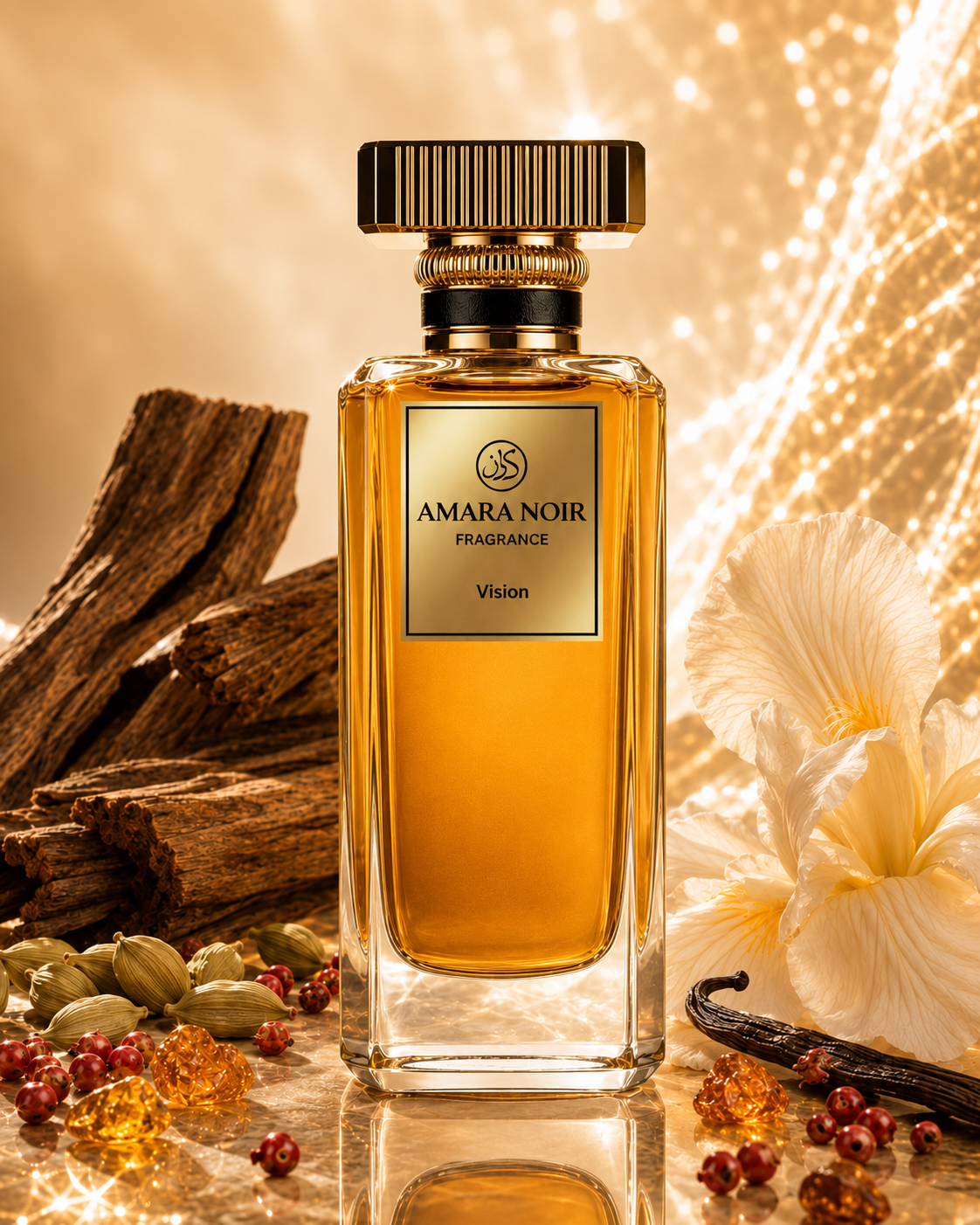
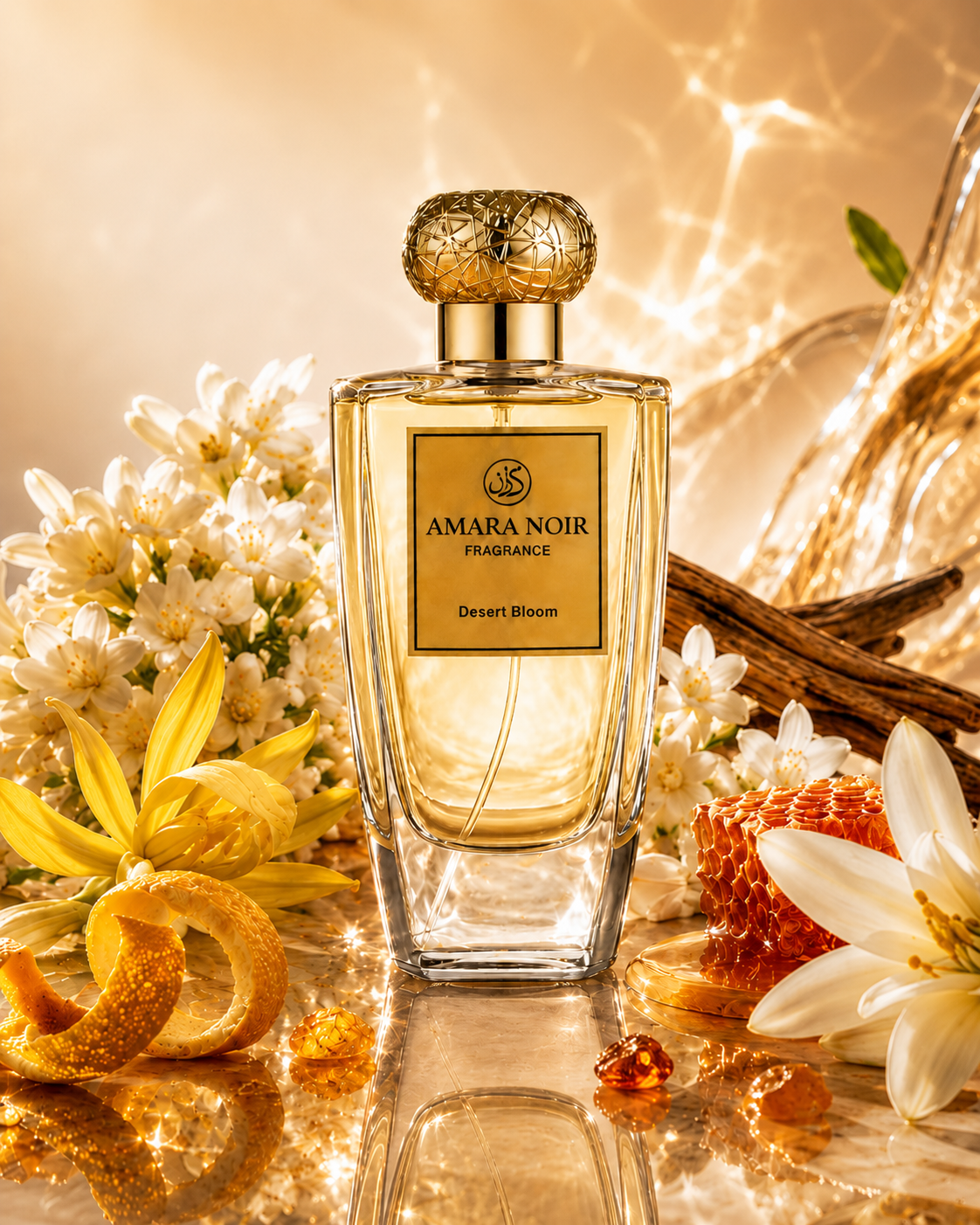
Choose Vision Intense to explore iris inside a cardamom, pepper and sandalwood composition. Choose Desert Bloom to explore a tuberose-and-ylang-ylang heart framed by honey, citrus, sandalwood and soft resins. Both descriptions include flowers and woods, but the floral texture you want is a useful place to begin the comparison.
A broad search for floral woody perfume can bring very different compositions together. Ask which central flower direction interests you, then look at the opening and base that surround it. That gives the phrase floral woody a more personal meaning.
Put the flower choice first
Iris within Vision Intense
Vision Intense lists creamy sandalwood and iris at the heart. Warm cardamom and pink pepper form the opening, with subtle vanilla resin and musk in the base. The floral element belongs within a spiced and woody structure.
If iris is a note you have wanted to explore, this combination gives it a specific setting. Consider whether cardamom and pepper above, and vanilla resin and musk beneath, are also part of the direction you would enjoy.
Tuberose and ylang-ylang within Desert Bloom
Desert Bloom places tuberose and ylang-ylang together at the centre. Golden honey and citrus peel appear at the top, while sandalwood and soft resins make up the base. Here, the floral heart is paired with a honeyed opening and a woody, resinous foundation.
If those two flower notes are the attraction, keep the honey in the picture. You are exploring a complete floral composition whose surroundings differ from Vision's cardamom-and-pepper opening.
Two ways a floral lover might choose
Imagine someone who enjoys fuller flower-led fragrances and wants a wood note beneath them. Desert Bloom is a relevant first candidate because tuberose and ylang-ylang are central, with sandalwood in the base. The next question is whether the honey and citrus opening also appeals.
Now imagine someone interested in flowers as one part of a spiced-wood perfume. Vision Intense makes that question more specific through iris beside creamy sandalwood. The opening spices are part of the appeal, rather than a separate detail to overlook.
These situations show why the whole composition matters. Neither preference needs a rule about which flowers are right for a particular person. The useful distinction is what you want the floral heart to sit beside.
The shared sandalwood cue needs context
Sandalwood appears in both pyramids, in different positions. Vision lists creamy sandalwood in the heart with iris. Desert Bloom lists sandalwood at the base with soft resins.
If sandalwood brought you to this comparison, look back at the central notes before deciding. A shared wood name can lead to two meaningful candidates without making the fragrances interchangeable. The arrangement is what gives you the next question to explore. If your existing choices already centre on tuberose, trying iris within sandalwood and spice can make the floral comparison more informative.
Compare the question that still matters
Ask whether your next fragrance should centre on the tuberose-and-ylang-ylang direction, or whether iris within spiced woods is the more interesting choice. You can narrow the trial to that one difference, then record which complete scent you want to revisit.
The Amara Noir Discovery Set includes Vision and Desert Bloom among its six profiles. For a narrower comparison, use the individual options in Sample Scents. Our Vision Intense guide and Desert Bloom guide explain each profile before you make that personal floral choice.

Leave a comment
This site is protected by hCaptcha and the hCaptcha Privacy Policy and Terms of Service apply.